
La voix passive est l’opposée de la voix active. À la voix active, le sujet effectue l’action. À la voix passive, le sujet subit l’action. Lorsque nous sommes à la voix passive il est possible de retirer l’objet, il est même parfois inconnu, lorsque l’on ne sait pas qui fait l’action (this pen was left here).
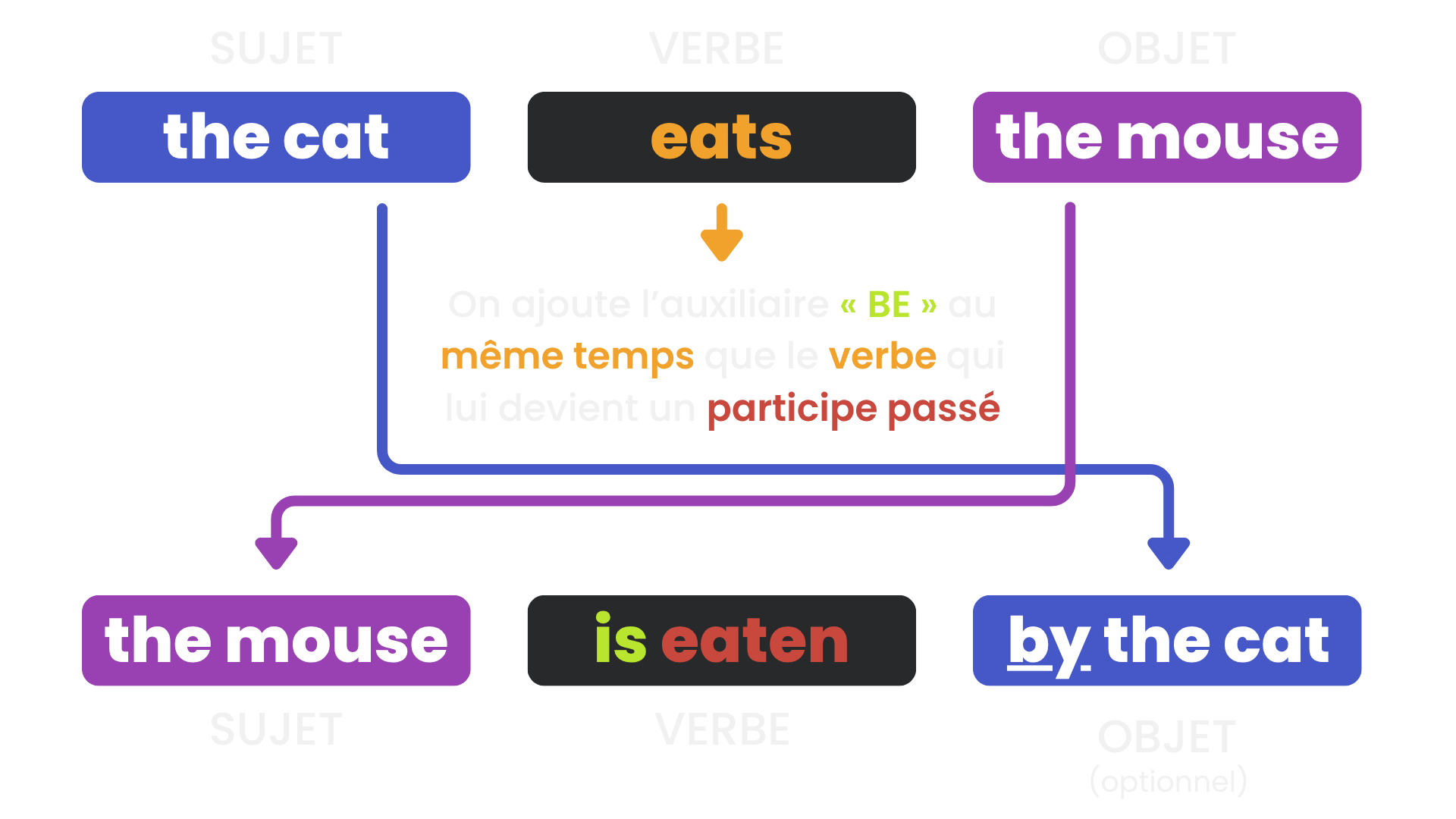
La principale difficulté de la voix passive est dans sa construction en trois étapes. Il faut d’abord identifier le temps du verbe à la voix active, conjuguer l’auxiliaire « be » à ce même temps et faire attention aux accords avec le sujet, et enfin ajouter le participe passé du verbe.
PRESENT | -S (he, she, it)
The cat eats the mouse
The mouse is eaten (by the cat)
PRÉSENT CONTINU | BE + -ING
The cat is eating the mouse
The mouse is being eaten (by the cat)
PRÉTÉRIT | -ED / Irréguliers
The cat ate the mouse
The mouse was eaten (by the cat)
PRESENT PERFECT | HAVE + Participe Passé
The cat has eaten the mouse
The mouse has been eaten (by the cat)